No. One card works for one person only. Tapping the same card twice for two people will not work. Each person needs their own card.
This guide explains why the system blocks card sharing, what happens if you try, and the cheapest ways to get cards for everyone in your family.
The Simple Rule: One Person, One Card, One Tap
The Hafilat system was built for individual passengers. Not for groups. Not for families. Not for sharing.
When a card gets tapped on the bus reader, the system records that specific card for that specific person. It tracks where they boarded and where they got off. It calculates the fare based on their trip.
The system cannot handle two people using the same card. It gets confused. It does not know who is who. It does not know where each person got off.
So the rule is simple. One person. One card. One tap.
What Happens If You Try to Share a Card?
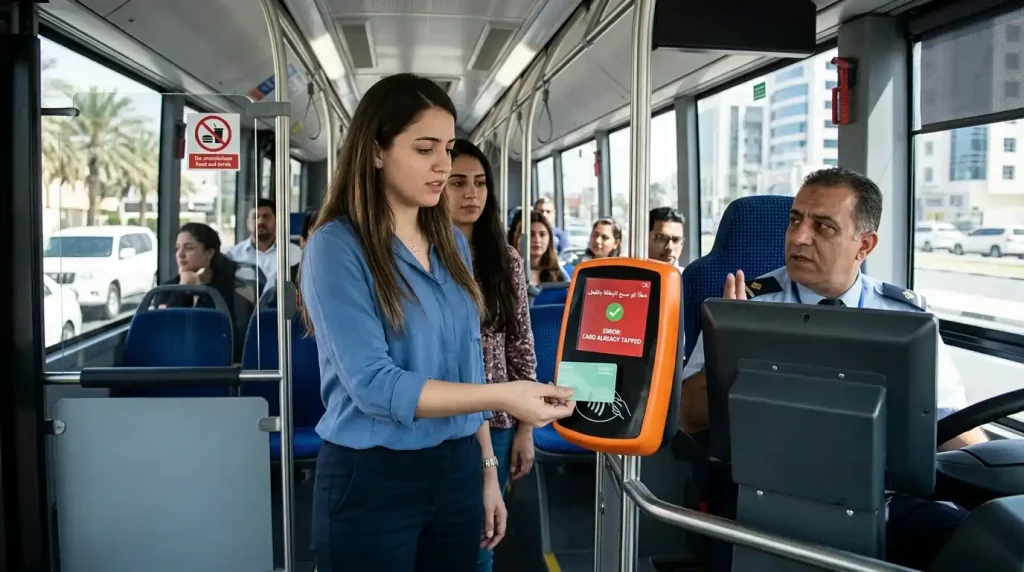
Some passengers think they can tap once for themselves and again for their spouse or child. Here is what actually happens.
First tap
Works fine. The system records the boarding point for the first person.
Second tap (same card, same stop, a few seconds later)
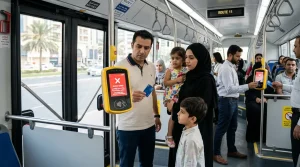
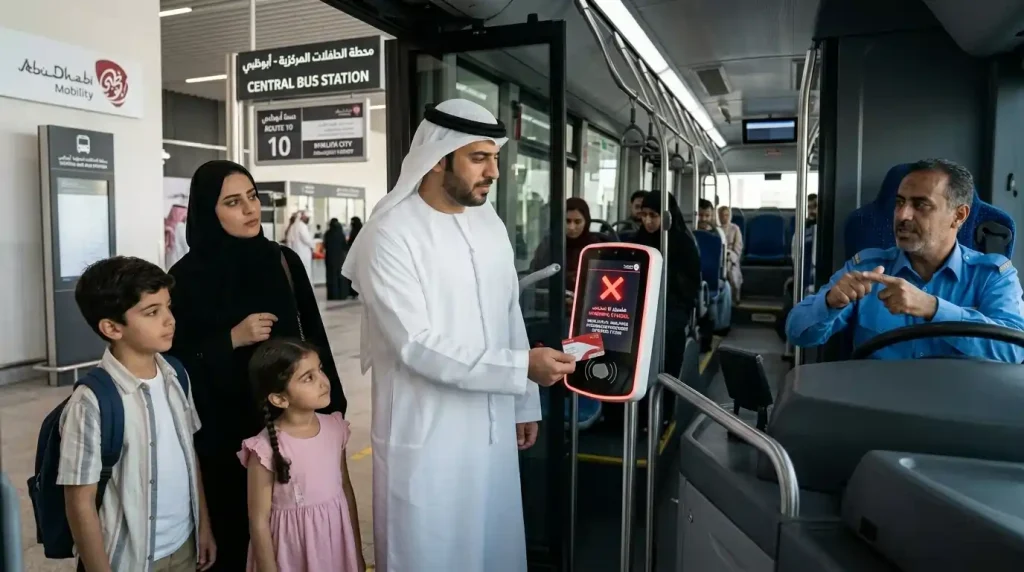
The reader shows a red light. Or it beeps but does not register properly. The second person cannot board.
If the second tap somehow works, the system now thinks one person boarded twice. It does not know there are two different people.
Both trips are linked to the same card. The passenger gets charged extra. Sometimes the maximum fare.
If an inspector checks the bus, only the cardholder has a valid tap. The other person is traveling without a valid ticket. That means a fine.
A Reddit user shared what happened when they tried:
“Tapped my card for myself. Tapped again for my son. Red light. The driver told me one card per person. Had to pay cash for my son. Felt embarrassed holding up the line.”
Another user wrote:
“Visiting from overseas. Bought one anonymous card, thinking the family could share. Found out on the first bus that does not work. Had to buy three more cards at the next station. Wasted time but learned the rule.”
The message is clear. Sharing does not work.
Why the System Blocks Card Sharing
There are good reasons for this rule. It is not just to make things difficult.
Reason 1: Fare calculation
The system charges based on distance. It needs to know where each person boarded and where they got off. One card cannot track two different people going to two different places.
Reason 2: Concession fares
Students get discounted fares. Seniors ride free. People of determination get free companion travel. These benefits are tied to specific cards linked to specific people. Sharing would break the system.
Reason 3: Inspector checks
Inspectors board buses randomly. They scan cards to make sure every passenger tapped in. If two people share one card, only one has a record of tapping. The other gets fined.
Reason 4: Fraud prevention
Without this rule, a group of ten people could buy one card and all ride for free. The system would lose money. Honest passengers would pay more to cover the losses.
Every major public transport system has the same rule. Dubai’s Nol card. London’s Oyster card. Singapore’s EZ-Link card. One card, one person.
What Are the Fines for Card Sharing?
Traveling without a valid tap is a violation. The fines can be steep.
| Violation | Typical Fine |
| Boarding without tapping any card | AED 200 or more |
| Using someone else’s card | AED 200 or more |
| Tapping once for two people | AED 200 or more (for the person without a tap) |
| Repeated violations | The card may be blocked |
One Reddit user shared a warning:
“A friend tried to use his brother’s student card to save money. The inspector scanned the card. The photo on the screen did not match. A fine was issued on the spot. Not worth the risk.“
So do not share cards. Do not use someone else’s card. Get a card for each person.
The Best Card Options for Families
The good news is that getting cards for everyone is easy and cheap, but understanding different card types is crucial for choosing the right card for your family. Here are the best options for different situations.
Option 1: Temporary Cards (Best for Tourists)
| Detail | Information |
| Cost | Free |
| Valid for | 30 days |
| Where to get | Any Ticket Vending Machine |
| ID needed | No |
A family of four arriving at Abu Dhabi Airport can get four temporary cards in under five minutes. Walk to any TVM. Select “Buy New Card.” Choose “Temporary Card.” Take the free card. Add credit. Done.
Total cost for a family of four: AED 0 for the cards. Add AED 30-50 credit per person for a few days of travel.
Option 2: Anonymous Cards (Best for Occasional Riders)
| Detail | Information |
| Cost | AED 10 per card (some versions may be free with a minimum initial load of AED 10–20; check the TVM screen when purchasing) |
| Valid for | 16 years |
| Where to get | TVM, Lulu Hypermarket, airport |
| ID needed | No |
A family of four can buy four anonymous cards for AED 40 total. These cards last 16 years. Keep them in a drawer. Use them whenever someone needs to ride the bus. Add credit as needed.
Total cost for a family of four: AED 40 for the cards. Plus credit for trips.
Option 3: Personalized Cards (Best for Residents)
| Detail | Information |
| Cost | Free |
| Valid for | 16 years |
| Where to get | Online registration + pickup at Customer Center |
| ID needed | Emirates ID for each adult |
Each adult family member can get their own personalized card for free. The card is linked to their Emirates ID. If lost, the balance can be recovered. Online account access to check balance and recharge.
Total cost for a family of four: AED 0 for the cards. Add credit as needed. If your whole family rides daily, a monthly pass might be cheaper than paying per trip. Our breakdown of whether a monthly pass actually saves you money helps you decide.
Option 4: Student Cards (Best for Children Aged 5-15)
| Detail | Information |
| Cost | AED 5 per card |
| Valid for | 5 years |
| Where to get | Customer Happiness Center |
| ID needed | Emirates ID, student ID, school letter |
Children aged 5 to 15 qualify for student cards. The card costs AED 5. The annual pass costs AED 500 and gives unlimited travel for a full year.
Total cost for a family of four (two adults, two children):
- Adults: Free personalized cards
- Children: AED 5 each for student cards
- Total: AED 10 for the family
Once each family member has their own card, remind them, “Don’t forget to tap out properly.”
Option 5: Children Under 5
Most bus drivers allow children under 10 to ride for free without a card, according to official Abu Dhabi Mobility guidelines. The child boards with the parent and should have proof of age (such as an Emirates ID or passport) if requested by an inspector.
But some drivers may ask for a card. For peace of mind, get a free temporary card for the child. Add a small amount of credit (AED 10). Then there is no worry.
How to Manage Multiple Cards from One Phone
One parent can manage all family cards from a single Darb app account. No need to log in and out of different accounts.
Steps to add family cards:
- Open the Darb app.
- Log in to the parents’ account.
- Go to “My Cards.”
- Tap “Add Card.”
- Enter the 16-digit number from each family member’s card.
- Give each card a nickname (“Son’s Card,” “Daughter’s Card”).
What the parent can do from one account:
- Check the balance on every family card.
- Recharge any card with a few taps.
- See transaction history for each card.
- Get low-balance alerts for all cards.
- Report a lost card for any family member.
One Reddit user shared this tip:
“I manage cards for my wife and two kids from my phone. Check balances every Sunday night. Recharge any low cards. Takes two minutes. No one gets stuck at the bus stop with zero balance.“
What About Children Traveling Alone?
If a child takes the bus to school alone, they need their own card. Do not give them a parent’s card.
For children aged 5-15: Get a Student Card. It costs AED 5. Add the annual pass for AED 500. The child taps in and out on their own. No worries about the balance running low.
For teenagers aged 15 and above: Get an anonymous card (AED 10) or a personalized card (free). Add credit as needed. Set up low-balance alerts on the parent’s phone.
Conclusion
One Hafilat card is for one person. Sharing does not work. The system blocks the second tap. Inspectors fine passengers without valid taps.
But getting cards for a family is simple and cheap.
- Tourists get free temporary cards.
- Occasional riders pay AED 10 for anonymous cards that last 16 years.
- Residents get free personalized cards.
- Children get AED 5 student cards.
A family of four can get four cards for AED 0 to AED 40. Add credit to each card. Ride the bus together. No fines. No embarrassment. No hassle.
And one parent can manage every card from a single Darb app. Check balances. Recharge. Track trips. All from one phone.
So get a card for every person. Tap separately. Ride together.